


Aipan art is one of the most beautiful traditional folk art forms of Uttarakhand, India. Known for its elegant white patterns on a red background, this art reflects the cultural heritage, beliefs and artistic traditions of the Kumaon region. From decorating entrances and courtyards to creating sacred designs for mandirs, Aipan has an important place in traditional ceremonies and modern homes.
In this guide, you will discover the history of Aipan art, its traditional colours and tools, popular Aipan art designs, and simple steps to make Aipan art at home.
What Is Aipan Art?
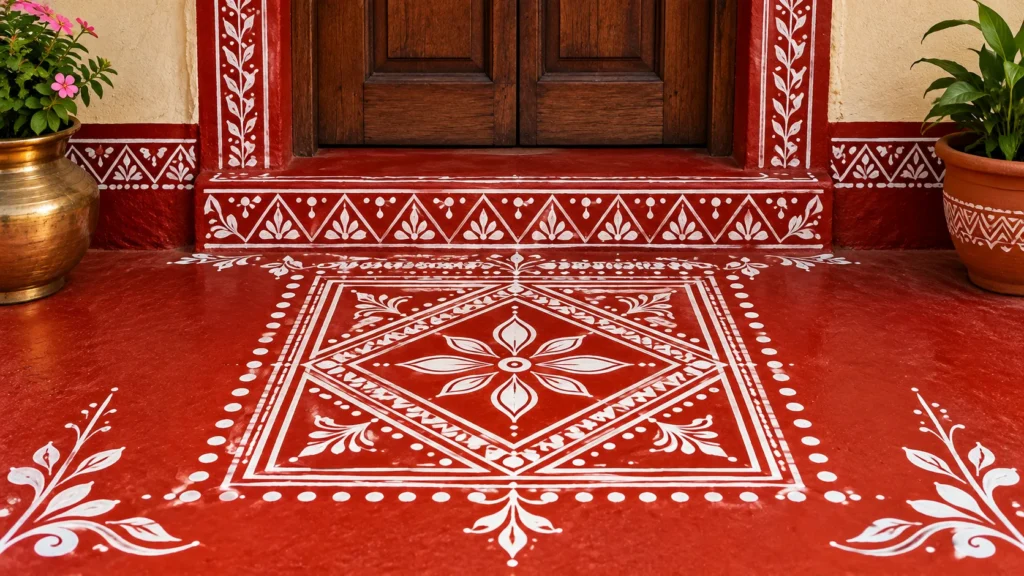
Aipan art is a traditional folk art form associated with Uttarakhand, particularly the Kumaon region. It is traditionally created on floors, walls, doorsteps and places used for religious ceremonies.
Traditional Aipan designs often feature geometric patterns, dots, lines, flowers and symbolic motifs. These patterns are commonly made using white rice paste over a red background prepared with geru, a natural red ochre material.
Aipan is more than decoration. It represents cultural identity, devotion, creativity and the continuation of traditions passed down through generations. For more information about the traditional designs and cultural significance of Aipan art, explore the Incredible India guide to Aipan art.
Aipan Is Associated with Which State?
Aipan art is associated with Uttarakhand, India, especially the Kumaon region.
It is practised during festivals, weddings, religious occasions and other important family ceremonies. Although traditional Aipan is closely connected with Kumaoni culture, it is also gaining popularity in other parts of India through home décor, handmade products and contemporary artwork.
What Is the Meaning of Aipan Art?
Aipan is a traditional decorative and ritual art form that expresses auspiciousness, devotion and cultural heritage.
The designs are often created to mark special occasions, welcome guests and decorate sacred spaces. Different patterns may have different cultural or ritual associations depending on the occasion and local tradition.
Aipan also represents the creativity of local artists and the preservation of Uttarakhand’s folk-art heritage.
History of Aipan Art
Aipan art has deep roots in the traditional culture of Kumaon, Uttarakhand. Historically, families created these designs at home during religious ceremonies, festivals, weddings and other auspicious occasions.
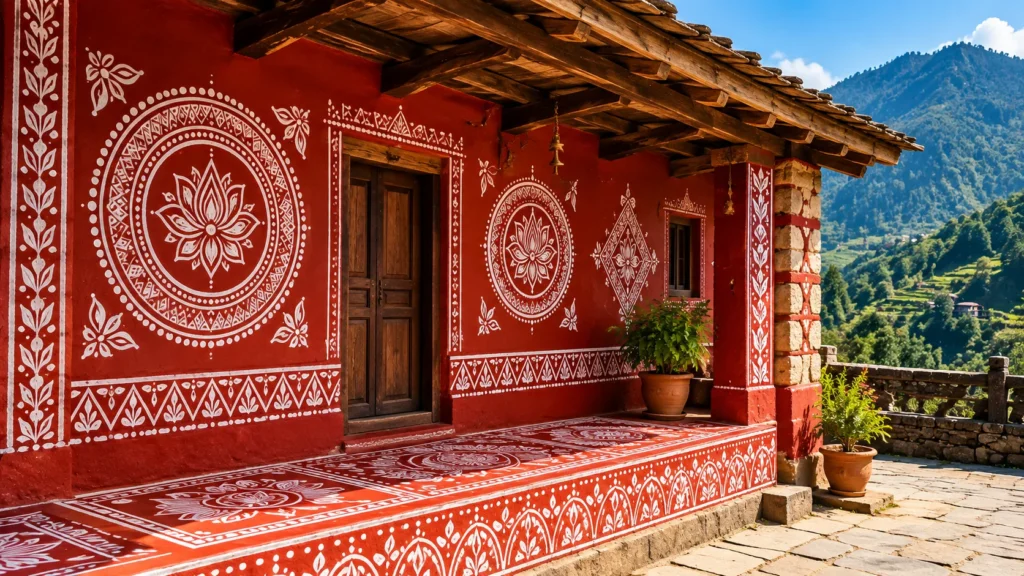
The art was traditionally practised by women and passed from one generation to another through observation and practice. Designs were made by hand using locally available materials, including red geru and white rice paste.
Different patterns were associated with particular ceremonies and sacred spaces. The designs could be created on entrances, courtyards, floors and areas used for worship.
Today, Aipan art continues to evolve. Artists use traditional motifs on canvases, wooden products, decorative plates, wall hangings, notebooks and other handmade items. These contemporary applications help introduce this regional art form to new audiences while keeping its cultural roots visible.
Traditional Colours Used in Aipan Art
The traditional Aipan colour combination is simple yet distinctive.
1. Red Background
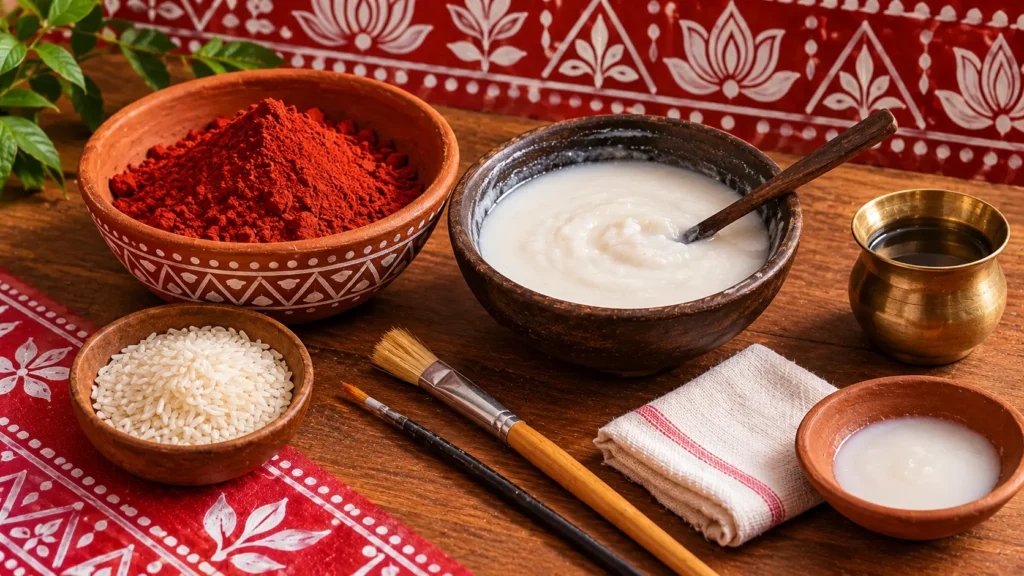
Red is traditionally created using geru, a red ochre material. It provides the background against which the white patterns stand out.
2. White Rice Paste
White designs are traditionally drawn using a paste made from rice flour or ground rice mixed with water. The paste is commonly known as biswar in the local tradition.
3. Modern Colours
Contemporary artists may use acrylic paints, fabric paints, markers and other materials for decorative or commercial projects. These alternatives are useful for creating long-lasting designs on modern surfaces, although they differ from traditional materials.
Aipan Art Tools and Materials
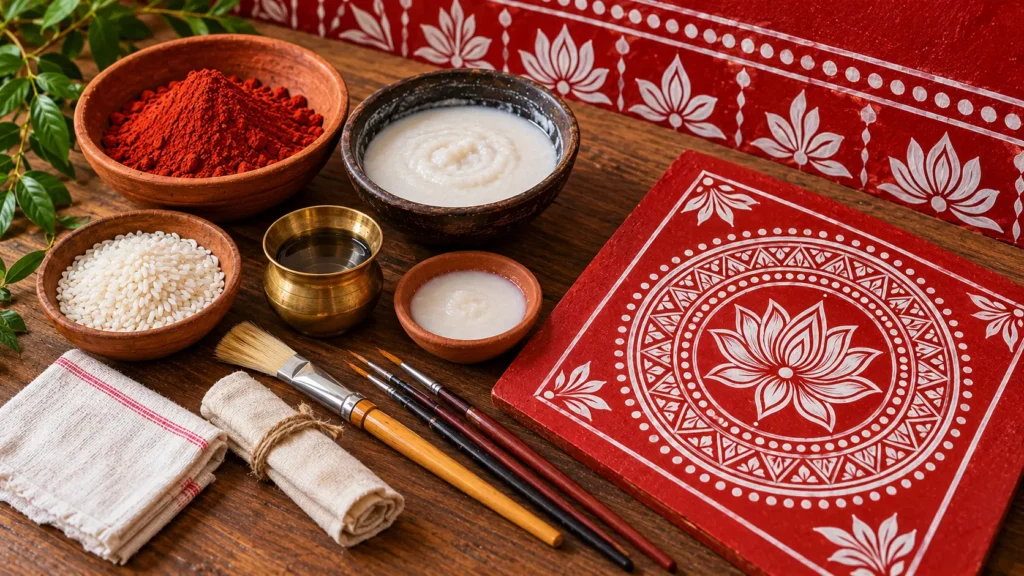
If you want to create Aipan art at home, you can begin with a few basic materials.
- Geru or a red base: Used traditionally to prepare the red background.
- Rice flour or ground rice: Used to prepare the white paste.
- Water: Mixed with rice flour to make a workable paste.
- Cotton cloth or fingers: Traditionally used to apply the white paste.
- Small brushes: Helpful for modern interpretations and detailed work.
- Plate, paper, canvas or wooden board: Suitable surfaces for practice and contemporary designs.
- Pencil and ruler: Optional tools for planning geometric patterns.
For your first attempt, choose a small, flat surface and practise simple lines, dots and symmetrical patterns.
Popular Aipan Art Designs
Aipan art includes a variety of designs used for different decorative and ceremonial purposes. The exact patterns and their meanings can vary by region, family and occasion.
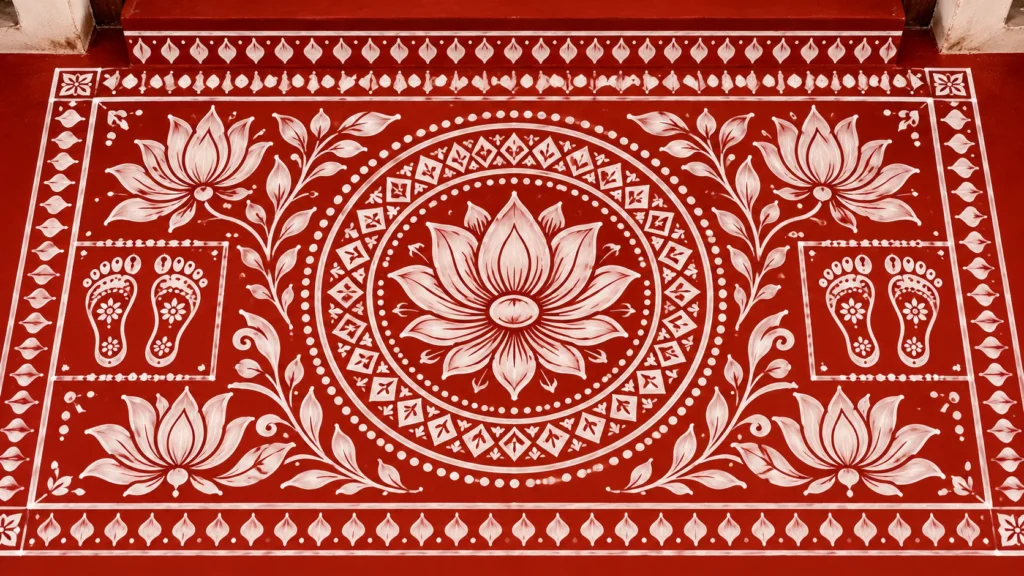
1. Traditional Geometric Aipan
Geometric Aipan designs use straight lines, dots, circles, squares and repeated shapes. These patterns are suitable for beginners because they help develop control and symmetry.
2. Floral Aipan Design
Floral-inspired patterns add a decorative touch to traditional artwork. They can be used on handmade cards, wall art, plates and other craft projects.
3. Aipan Design for Mandir
Aipan designs for a mandir often feature carefully arranged lines, dots and symmetrical motifs around a sacred space. A small design on a wooden board or decorative plate can be a practical option for modern homes.
When choosing a mandir design, consider the available space and the tradition followed by your family.
4. Laxmi Padchinha-Inspired Designs
Footprint-inspired motifs are used in some traditional ceremonial designs associated with welcoming prosperity and auspiciousness. Their use and interpretation depend on local customs.
5. Modern Aipan Wall Art
Modern Aipan wall art adapts traditional motifs for contemporary interiors. Artists may create framed artwork, painted boards, coasters, trays and decorative objects inspired by the red-and-white visual style.
How to Make Aipan Art at Home
You do not need to be an expert artist to begin learning Aipan art. Follow these simple steps to practise a basic design.
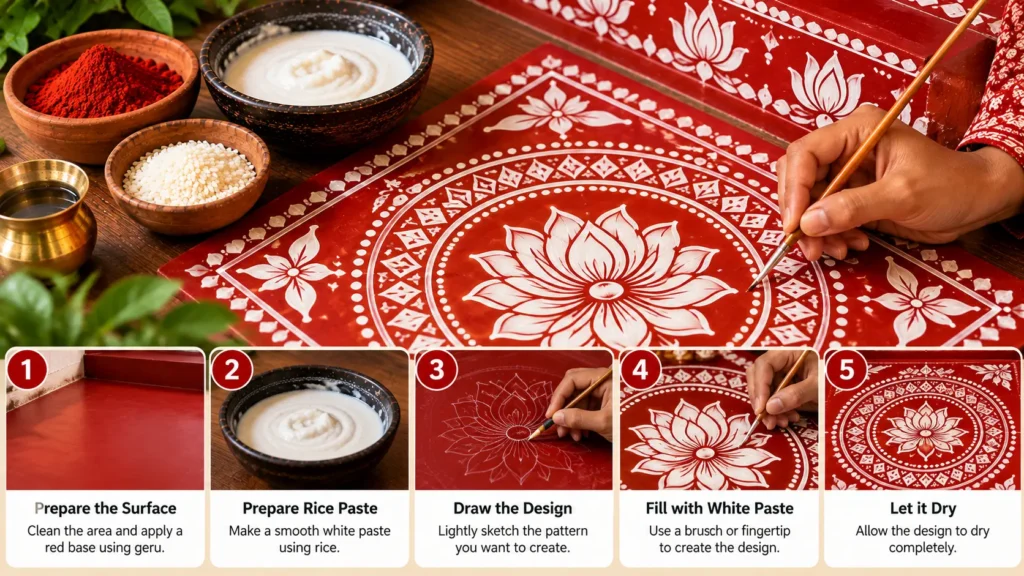
Step 1: Prepare the Surface
Choose a clean, flat surface. For a beginner-friendly project, use thick paper, a practice board or canvas. If you want to follow a traditional method, prepare the surface according to the material you are using.
Step 2: Create the Red Background
Traditionally, geru is used to prepare a red background. For a modern craft project, you can use a suitable red paint on your chosen surface. Allow it to dry completely before adding the white design.
Step 3: Prepare the White Paste
Mix rice flour or finely ground rice with a small amount of water to make a smooth paste. Adjust the consistency so it can be applied in controlled lines without becoming too watery.
Step 4: Plan a Simple Pattern
Start with a central point, a square, a circle or a symmetrical arrangement of dots. You can lightly plan the layout before applying the white paste.
Step 5: Draw the Design
Use your fingers, a piece of cotton cloth or a small brush to apply the white paste. Work slowly and repeat the patterns carefully to maintain balance.
Step 6: Let the Artwork Dry
Allow your design to dry naturally. If you are working on paper, wood or canvas with modern paints, follow the drying instructions for the materials you have chosen.
Step 7: Display Your Artwork
Place the finished artwork in a suitable location or frame it for display. If you plan to use it in a mandir or during a ceremony, follow the relevant family and regional customs.
Aipan Design for Mandir Decoration
Aipan art can add a traditional touch to a home mandir. A small, symmetrical design on a decorative board or plate can be an attractive option when there is limited space.
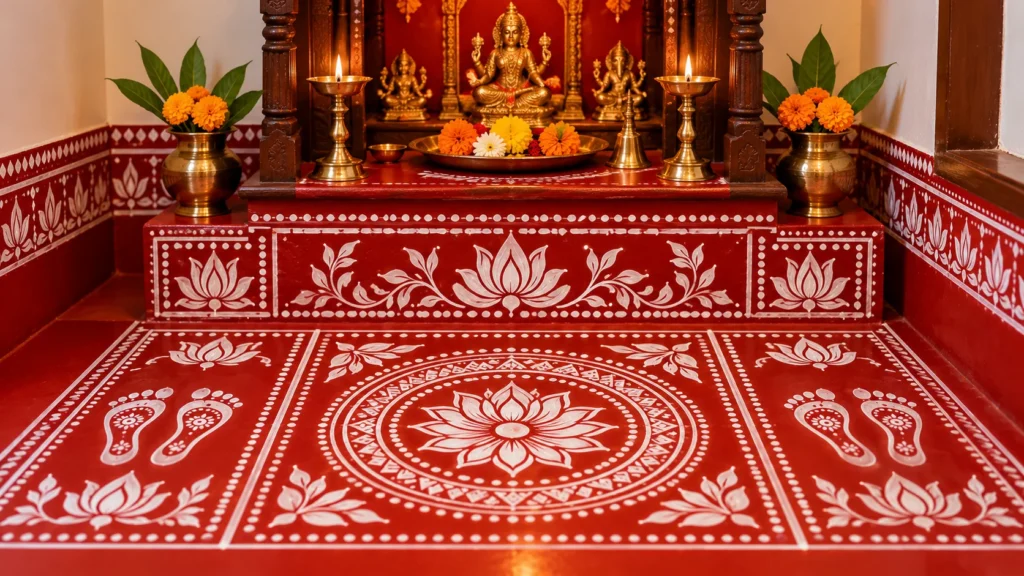
For a traditional-inspired look, use a red background and white patterns. Keep the design balanced and avoid overcrowding the space with too many motifs.
You can also create a removable Aipan-inspired panel for a shelf or wall. This makes it easier to display the artwork without painting directly on the mandir.
Remember that ceremonial designs may have specific meanings in local traditions. If you are creating Aipan for a particular religious occasion, learn about the appropriate pattern from a knowledgeable local practitioner.
Difference Between Aipan Art and Rangoli
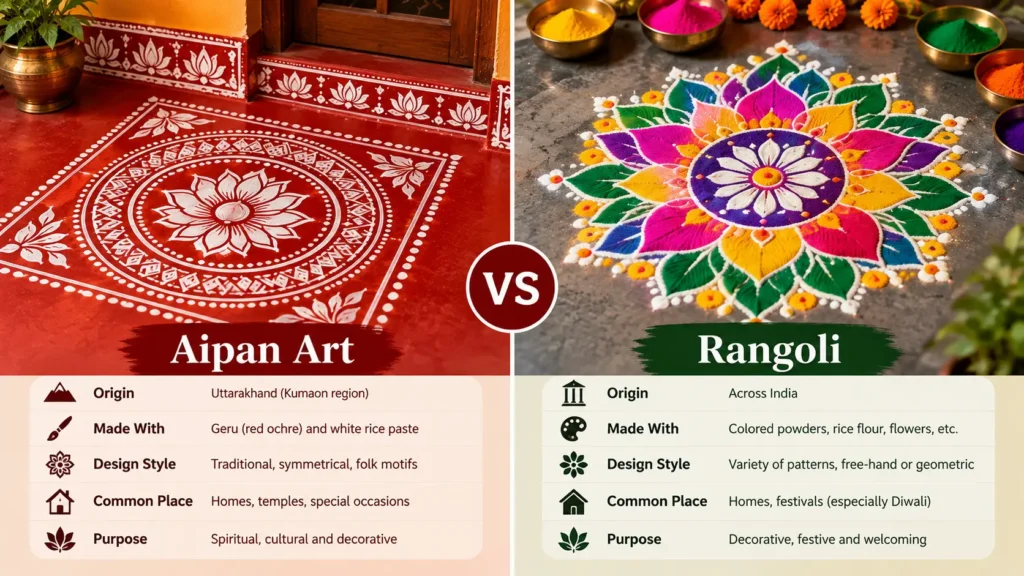
Aipan art and Rangoli are both decorative art forms associated with Indian homes and celebrations, but they have different regional traditions and common materials.
Aipan is particularly associated with Uttarakhand, especially Kumaon, and traditionally features white patterns on a red geru background.
Rangoli is practised in many parts of India and commonly uses coloured powders, flowers, rice, sand or other materials to create decorative floor patterns. Its styles and materials vary widely by region.
Both art forms express creativity and cultural traditions. However, Aipan has its own distinctive patterns, materials and ceremonial associations.
Modern Uses of Aipan Art
Today, Aipan art is being adapted for many creative and commercial purposes, including:
- Home décor and framed wall art
- Decorative plates and wooden boards
- Wedding and festival decorations
- Handmade greeting cards and notebooks
- Coasters, trays and gift items
- Fabric and accessory designs
- Art workshops and cultural activities
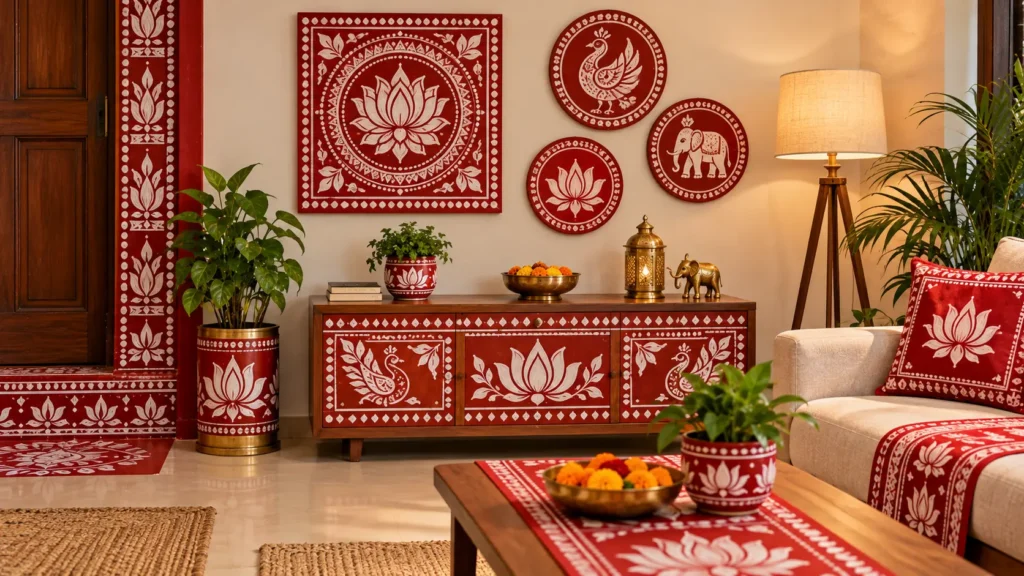
These modern applications provide new ways to appreciate the traditional art form. When creating or selling Aipan-inspired products, it is helpful to acknowledge the art’s regional roots and avoid presenting unrelated designs as authentic traditional motifs.
Why Is Aipan Art Important?
Aipan art is important because it preserves the artistic traditions and cultural identity of Uttarakhand.
It connects families with customs followed during festivals, weddings and religious ceremonies. It also provides opportunities for local artists and craftspeople to share their skills with wider audiences.
Learning Aipan art can be a way to explore regional heritage, develop artistic skills and appreciate the meaning behind traditional handmade designs.
Common Mistakes to Avoid When Making Aipan Art
If you are a beginner, keep these points in mind:
- Using overly watery paste: A very thin paste may spread and make the lines difficult to control.
- Starting with a complex design: Practise simple shapes before attempting detailed patterns.
- Ignoring symmetry: Repeated lines and balanced spacing help create a neat design.
- Choosing an unsuitable surface: Test your materials on a small area first.
- Treating every motif as interchangeable: Traditional designs can have specific ceremonial associations, so research the pattern before using it for a particular occasion.
- Confusing modern adaptations with traditional methods: Contemporary paints and decorative products can be useful, but they are not always the same as traditional Aipan materials.
Frequently Asked Questions About Aipan Art
1. What is Aipan art?
Aipan art is a traditional folk art form associated with Uttarakhand, particularly the Kumaon region. It is known for white patterns traditionally drawn on a red geru background.
2. Aipan is associated with which state?
Aipan art is associated with Uttarakhand, India, especially the Kumaon region.
3. Which colours are used in traditional Aipan art?
Traditional Aipan commonly uses a red background prepared with geru and white rice paste for the patterns.
4. What materials are needed to make Aipan art at home?
You can begin with a suitable surface, red base, rice flour, water and a way to apply the white paste, such as your fingers, cotton cloth or a small brush. Modern projects may use acrylic or other suitable paints.
5. How can I make Aipan art at home?
Prepare a surface, create a red background, make a smooth white rice paste, draw a simple symmetrical pattern and allow the artwork to dry.
6. Which Aipan design is suitable for a mandir?
A small, symmetrical traditional design can work well for a mandir. Choose a motif that suits your space and the customs followed by your family.
7. Is Aipan art the same as Rangoli?
No. Both are Indian decorative art forms, but Aipan is associated particularly with Kumaon in Uttarakhand and traditionally uses white patterns on red, while Rangoli includes many regional styles and materials.
8. Can Aipan art be used for modern home décor?
Yes. Aipan-inspired designs are used on wall art, decorative plates, wooden boards, coasters, trays and other craft products.
Conclusion
Aipan art is a distinctive part of Uttarakhand’s cultural heritage. Its red background, white patterns and ceremonial associations make it both visually beautiful and culturally meaningful.
Whether you want to learn about its history, explore traditional designs, decorate a mandir or try making your first artwork at home, Aipan offers a wonderful way to connect with Kumaon’s artistic traditions.
By learning about the materials, practising simple patterns and respecting the cultural meaning of traditional motifs, you can appreciate Aipan art while helping keep this heritage alive for future generations.
Explore the traditional art of Uttarakhand, start with a simple design and discover the beauty of Aipan art.