


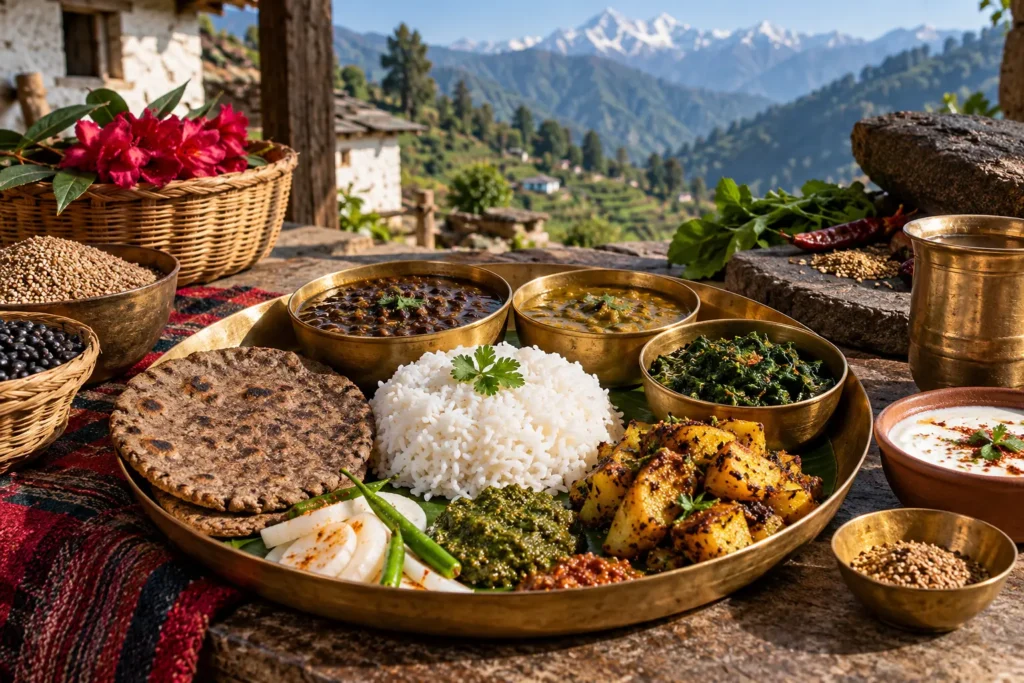
Kumaoni food is an important part of the culinary heritage of Uttarakhand, shaped by the landscapes, ingredients and everyday traditions of the Kumaon region. From hearty lentil preparations and millet-based breads to seasonal greens, fresh chutneys and traditional sweets, Kumaoni cuisine offers a distinctive combination of earthy flavours and simple cooking techniques.
Many traditional dishes use ingredients such as bhatt (black soybean), gahat (horse gram), madua (finger millet), jhangora (barnyard millet) and locally used seasonings. These ingredients are transformed into comforting meals through roasting, simmering, grinding and slow cooking. The exact recipes can vary from one household to another, making family traditions an important part of the cuisine.
Whether you are exploring the food of Almora, planning a trip to Nainital or hoping to prepare a traditional Pahadi meal at home, understanding Kumaoni food means looking beyond a list of famous dishes. It also means discovering the ingredients, techniques and local practices that give these meals their character.
Table of Contents
What Is Kumaoni Food?
Kumaoni food refers to the traditional cuisine of the Kumaon region of Uttarakhand, India. It includes everyday meals, festive preparations, seasonal foods, snacks, breads, chutneys and sweets that have developed around local ingredients and household cooking traditions.
The cuisine includes a variety of pulses, grains, vegetables and dairy-based preparations. Rice and wheat are used alongside traditional grains such as madua and jhangora. Pulses such as bhatt and gahat feature in several familiar dishes, while local seasonings contribute distinctive flavours.
Key Characteristics of Traditional Kumaoni Meals
1. Everyday ingredients with distinctive flavours
Many dishes are built around familiar ingredients rather than elaborate combinations. Pulses, grains, potatoes, leafy vegetables, curd and seasonal produce form the foundation of numerous meals.
2. Different cooking techniques
Roasting, grinding, tempering and slow simmering play important roles in many traditional preparations. For example, bhatt is roasted before being cooked in certain versions of Bhatt ki Churkani, while jakhiya is commonly used for tempering potatoes in Aloo ke Gutke.
3. Regional and household variations
A recipe passed down through one family may differ from a version prepared in another household. Ingredient proportions, spices, thickness and serving styles can all vary. There is no single recipe that represents every Kumaoni kitchen.
4. Food connected to everyday life
Traditional meals are not limited to special occasions. Lentil dishes, breads, rice, vegetables and chutneys are part of the wider home-cooking tradition, while sweets and selected preparations may be associated with festivals, gatherings or hospitality.
What Makes Kumaoni Cuisine Different?
Kumaoni cuisine reflects the ingredients available in the hills and the cooking practices developed around them. Its identity comes not from one particular dish but from the combination of local grains, pulses, seasonings and preparation methods.
Locally Available Grains and Pulses
Traditional grains and pulses are an important part of the region’s food heritage.
- Bhatt: A dark soybean variety used in dishes such as Bhatt ki Churkani and Bhatt ke Dubke.
- Gahat: Also known as horse gram, this pulse is used in dal and other traditional preparations.
- Madua: Finger millet used to make rotis and other flour-based foods.
- Jhangora: Barnyard millet used in savoury meals and desserts, including Jhangora ki Kheer.
The role of these ingredients extends beyond individual recipes. They offer different flavours and textures and can be prepared in several ways depending on the meal.
Traditional Spices and Seasoning
Jakhiya, a small seed used for tempering, is associated with the flavour of several Pahadi preparations. When added to hot oil, it contributes a distinctive aroma and texture.
Other seasonings, including cumin, chilli, coriander and locally prepared salt-and-spice mixtures, may be used depending on the dish and household recipe. Bhang ki Chutney is another familiar preparation in which roasted hemp seeds are ground with seasonings to create an accompaniment.
The aim is not always to make a dish extremely spicy. The balance between the main ingredient, seasoning and cooking technique is often just as important.
Seasonal Ingredients and Food Preservation
Seasonal produce contributes variety to Kumaoni food. Buransh, or rhododendron, is used in regional drinks and squash preparations. Kafal, a wild Himalayan berry, is associated with the warmer months, while leafy greens and other local produce may be available at particular times of year.
Drying, storing grains and pulses, and preparing preserved foods are useful ways of extending the availability of ingredients. However, the exact methods and seasonal calendars differ by location and household.
Home-Style Cooking and Regional Variations
Traditional cooking is often learned through family practice rather than a single written recipe. The amount of water used in a dal, the texture of a chutney or the way a particular vegetable is seasoned may reflect individual preferences.
This variation is part of the cuisine’s richness. When exploring Kumaoni food, it is useful to treat recipes as living traditions rather than fixed formulas.
Traditional Kumaoni Dishes You Should Know
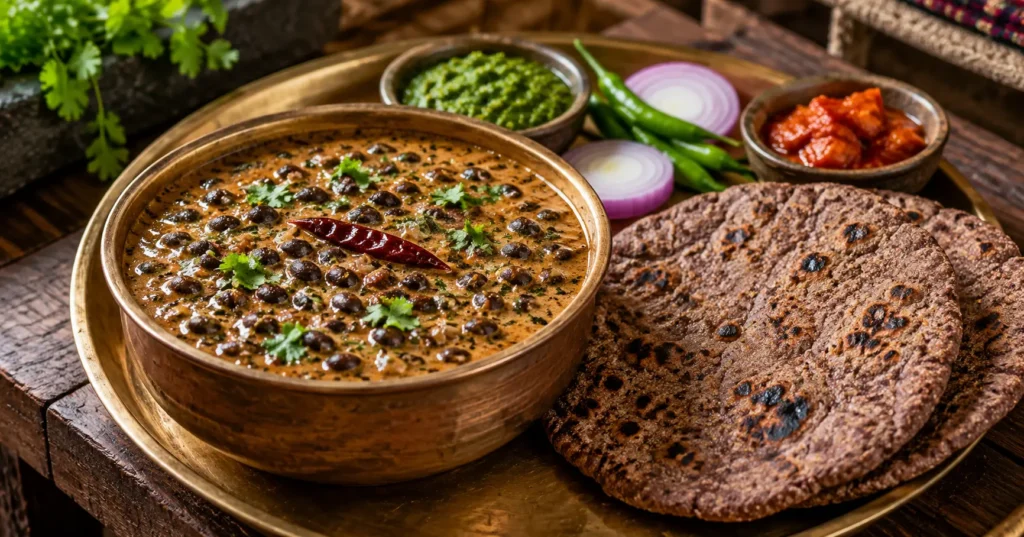
Traditional Kumaoni cuisine includes a variety of pulse-based dishes, grain preparations, seasonal foods and regional sweets. The District Almora cuisine guide offers additional information about local specialities such as Dubuk, Singori and Bal Mithai.
Bhatt ki Churkani
Bhatt ki Churkani is a traditional Kumaoni preparation made with bhatt, or black soybean. The beans are roasted and then cooked into a savoury curry, often thickened with flour or another suitable starch depending on the recipe.
Roasting contributes a deeper flavour, while simmering helps soften the beans and bring the gravy together. The finished dish is commonly enjoyed with rice.
For anyone trying this dish at home, the main practical considerations are allowing enough time for the beans to soften and achieving a smooth, well-seasoned gravy. Cooking times will depend on the beans, soaking method and equipment.
Bhatt ke Dubke
Bhatt ke Dubke is another preparation associated with black soybean. Unlike Churkani, versions of Dubke commonly use ground or coarsely processed pulses to create a thick, comforting dish.
The texture is an important part of the experience. The ground pulse should cook thoroughly and blend into the gravy rather than remain raw or gritty. Families may use different seasonings and methods, so it is worth following a recipe from a reliable Kumaoni cook when preparing it for the first time.
Gahat ki Dal and Ras
Gahat ki Dal is prepared using horse gram, a pulse with a distinctive earthy flavour. It can be served as a simple dal or used in other traditional preparations.
Ras is a broader type of pulse-based preparation in which selected pulses are cooked and their flavour and body are brought together into a rich, savoury liquid. The exact pulse combination and method can vary.
These dishes demonstrate how traditional cooking makes use of pulses in different forms. Instead of treating every pulse dish as interchangeable, it is useful to notice the differences in texture, thickness and preparation.
Chainsoo and Phanu
Chainsoo and Phanu are names associated with traditional pulse-based dishes in Uttarakhand, but regional classification and recipe details can vary.
Chainsoo is commonly described as a preparation in which roasted pulses are ground and cooked with seasonings. Roasting changes the flavour of the pulse and gives the finished dish a distinctive character.
Phanu is generally associated with soaked pulses cooked into a substantial preparation. The specific pulses and cooking method should be verified against the regional recipe being followed.
When discussing these dishes in a Kumaoni food guide, explain their preparation and acknowledge that some versions are more strongly associated with neighbouring Garhwali traditions.
Aloo ke Gutke
Aloo ke Gutke is a popular potato preparation made with boiled potatoes, oil and spices. Jakhiya is commonly used as a tempering ingredient, although seasoning choices can differ.
The potatoes are cut into pieces and cooked with the tempering until they are coated in spices and develop a lightly crisp exterior. They should remain soft inside rather than break apart completely.
Aloo ke Gutke can be served with puri, roti or other accompaniments. It is also a useful starting point for beginners because its ingredients are relatively accessible.
Sisunak Saag
Sisunak Saag is made using sisunak, or stinging nettle, a plant traditionally used in some Himalayan food preparations.
Correct identification and safe handling are essential because fresh nettle leaves can sting. The leaves need appropriate preparation and thorough cooking before eating. Anyone unfamiliar with the plant should obtain it from a reliable source rather than collecting unknown wild greens.
The finished preparation may be seasoned simply, allowing the greens to remain the focus. Recipes differ, so a locally verified method is preferable to assuming that every version uses the same ingredients.
Kumaoni Raita
Kumaoni-style raita is a curd-based accompaniment that may include cucumber or other locally used ingredients and seasonings. Mustard can contribute a sharp, distinctive flavour.
Raita offers a contrast to warm, savoury dishes and can be served alongside a larger meal. Its exact ingredients vary, so the name should not be taken to mean that every household prepares it identically.
Bhang ki Chutney and Pisyu Loon
Bhang ki Chutney is traditionally prepared using roasted hemp seeds ground with seasonings such as chilli, salt and citrus, depending on the recipe. It is served as an accompaniment rather than a main dish.
Pisyu Loon refers to a ground salt-and-spice preparation. The ingredients can vary, and grinding helps combine the seasonings into a convenient mixture for serving with meals.
Both examples show how a small accompaniment can contribute a strong flavour to an otherwise simple meal. Use food-grade ingredients from reliable sources and avoid making unverified health claims about either preparation.
Traditional Grains, Pulses and Ingredients Used in Kumaoni Food
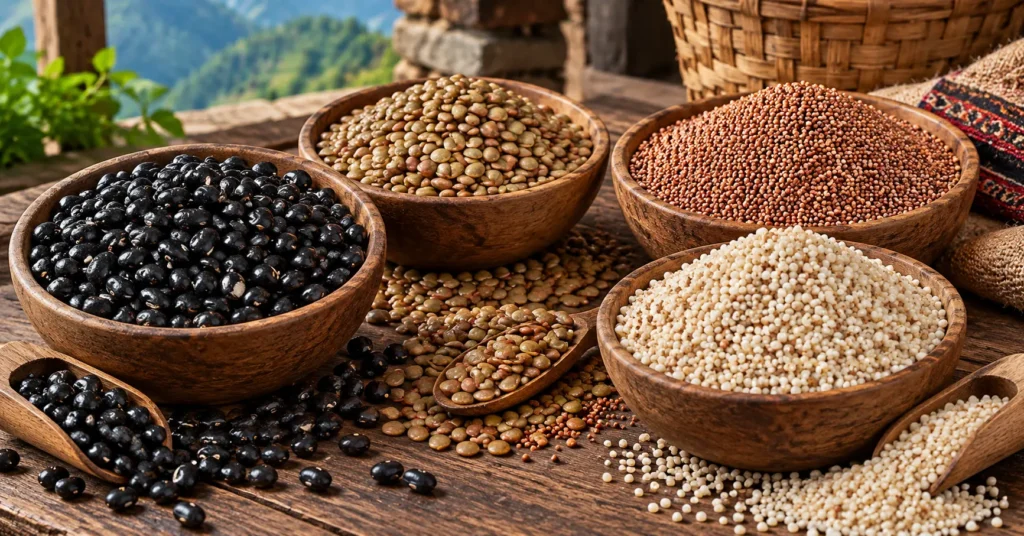
Understanding the ingredients makes it easier to appreciate the range of Kumaoni dishes and how they are prepared.
Bhatt and Gahat
Bhatt is a traditional black soybean used in several Kumaoni preparations, while gahat is horse gram. Although both are pulses, they have different characteristics and should not be treated as interchangeable in every recipe.
Bhatt is used in preparations such as Churkani and Dubke. Gahat is used in dal and other pulse-based dishes. Soaking, roasting, grinding and cooking methods depend on the particular recipe.
When buying these ingredients, look for food-grade pulses that are clean, dry and free from visible mould or insect damage. Store them in airtight containers in a cool, dry place.
Madua (Finger Millet)
Madua is finger millet, a grain traditionally used in parts of Uttarakhand. It is commonly ground into flour for rotis and other preparations.
Madua flour behaves differently from wheat flour because it lacks gluten. Its dough may be more delicate and can require a different amount of water and handling technique. Beginners may find it easier to learn from a tested recipe or use a traditional shaping method rather than expecting the dough to behave like ordinary wheat dough.
Jhangora (Barnyard Millet)
Jhangora is barnyard millet. It can be cooked as a grain for savoury meals or used in desserts such as Jhangora ki Kheer.
For a savoury preparation, the grain is generally cooked until tender while retaining a pleasant texture. In kheer, it is simmered with milk or another recipe-specified liquid until the mixture thickens.
The ratio of grain to liquid and the final consistency depend on the dish being prepared.
Jakhiya and Other Local Seasonings
Jakhiya is a small seed commonly used for tempering in regional cooking. It is particularly associated with potato preparations such as Aloo ke Gutke.
Other seasonings may include cumin, coriander, chilli and locally prepared spice mixtures. Use fresh ingredients and add them at the stage specified in the recipe to avoid burning delicate spices.
Seasonal Greens and Mountain Produce
Local vegetables, leafy greens, fruits and other produce contribute to the diversity of regional meals. Their availability depends on season, altitude, growing conditions and local markets.
Rather than claiming that every ingredient is available throughout Kumaon at the same time, a reliable food guide should explain where and when particular produce is commonly found, supported by local sources.
Traditional food practices in Uttarakhand are closely connected with locally available crops, ingredients and community knowledge. A published study on traditional food knowledge in Uttarakhand documents these food systems and their relationship with local resources.
What Does a Traditional Kumaoni Meal Look Like?
A traditional Kumaoni meal can include rice or roti, a pulse-based dish, seasonal vegetables and one or more accompaniments. The exact combination depends on the household, ingredients available and the occasion.
There is no single fixed thali that represents every family in Kumaon. A useful way to understand the cuisine is to look at how its different components work together.
Everyday Home-Style Meals
An everyday meal might combine steamed rice with a dal or pulse preparation, while another meal may feature madua roti with vegetables or a thicker lentil dish.
Chutneys, raita and seasonal greens can add contrasting flavours and textures. For example, a pulse-based curry may be served with rice, while Aloo ke Gutke can accompany puri or roti.
These are illustrative meal combinations, not a universal menu followed throughout the region.
What Goes into a Kumaoni Thali?
A Kumaoni-style thali may include:
- A grain: Rice, wheat roti or madua roti.
- A pulse preparation: Bhatt ki Churkani, Gahat ki Dal or another regional dal.
- A vegetable: Aloo ke Gutke or a seasonal vegetable dish.
- An accompaniment: Bhang ki Chutney, Kumaoni-style raita or a local salt-and-spice mixture.
- A seasonal addition: Greens, vegetables or fruit available locally.
The combination can change with the season and the household’s preferences. If you are trying a Kumaoni thali at a restaurant or homestay, asking which dishes are locally prepared can help you discover less familiar foods.
Traditional Kumaoni Sweets and Desserts
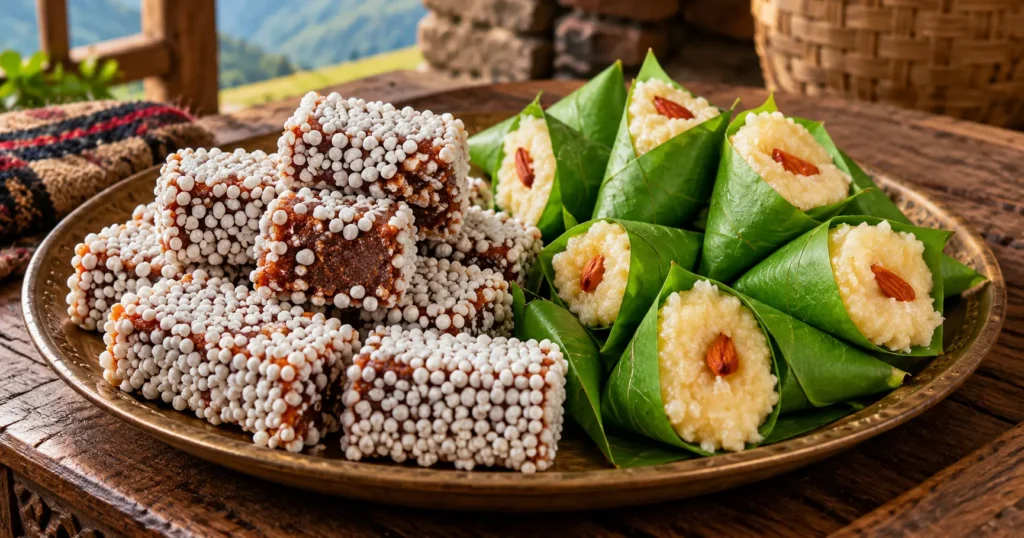
Kumaon’s sweet dishes include milk-based sweets, festive preparations and desserts made with traditional grains. Some are particularly associated with towns or local food traditions.
Bal Mithai
Bal Mithai is a well-known sweet associated with Almora and the surrounding Kumaon region. It is made from khoya cooked with sugar until it develops a dark brown colour and a fudge-like consistency. Small white sugar balls coating the outside provide a contrasting texture.
It is often purchased as a local sweet or gift. When buying it, check its freshness and storage instructions, particularly if you plan to carry it during a long journey.
Singori
Singori is a traditional khoya-based sweet commonly associated with Almora. It is shaped into a cone and wrapped in a leaf traditionally identified as malu or molu, depending on the source and local spelling.
The leaf gives the sweet its characteristic presentation and contributes an aroma to the experience. Because fresh versions may have a relatively short shelf life, it is worth asking the seller how soon the sweet should be consumed.
Arsa
Arsa is a traditional Pahadi sweet prepared using rice and jaggery, with recipes often involving oil for frying. It is associated with festive occasions and special gatherings in Uttarakhand.
Its texture and sweetness depend on the preparation method and the proportions used. Arsa also illustrates how simple staple ingredients can be transformed into foods reserved for celebration.
Jhangora ki Kheer
Jhangora ki Kheer is a dessert made with barnyard millet, commonly cooked with milk and sweetened according to the recipe. Some versions include nuts or dried fruit.
The grain gives the dessert a texture different from conventional rice kheer. Slow cooking allows the grains to soften and the mixture to thicken. Stirring regularly helps prevent sticking, while the liquid quantity determines whether the final dish is loose or creamy.
Seasonal Foods and Traditional Food Practices in Kumaon
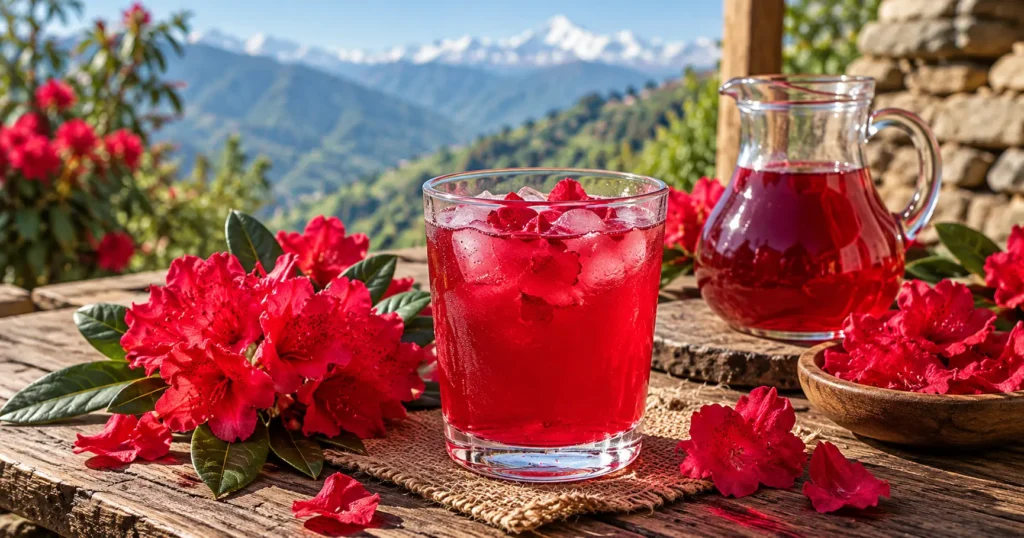
Seasonality is an important part of understanding the food of Kumaon. Local markets, orchards and household gardens can offer different ingredients throughout the year, and availability varies with altitude, weather and location.
Seasonal Fruits and Local Produce
Kafal, a wild Himalayan berry, is associated with the warmer part of the year. Peaches, plums, apricots and other orchard fruits are also available in parts of the region during their respective seasons.
Buransh, or rhododendron, is used in drinks and squash preparations. Availability and the timing of flowering can differ with local conditions, so a seasonal calendar should be treated as a guide rather than a guarantee.
For visitors, local markets can be a useful place to learn what is in season. Ask vendors where the produce comes from and how it is traditionally eaten.
Buransh-Based Drinks
Buransh-based drinks are made using rhododendron flowers, often in the form of a prepared squash or beverage. They are associated with the spring season in parts of Uttarakhand.
If preparing or buying such a drink, use food-grade products from reliable sources. Do not assume that every rhododendron species or unidentified wild flower is suitable for consumption.
Seasonal Greens and Winter Meals
Traditional food knowledge in Uttarakhand includes the use of seasonal greens and locally available vegetables. Sisunak Saag is one example of a preparation using nettle leaves, while dishes such as Dubuk are often associated with winter meals in local food descriptions.
However, not every household follows the same seasonal menu. Modern markets, storage and changing food habits also affect what people eat throughout the year.
Food Preservation and Traditional Preparation
Drying, storing grains and pulses, and preparing pickles or chutneys can help households use ingredients beyond their immediate harvest period. The methods differ by ingredient and local practice.
If you want to explore this aspect in greater depth, interviews with local cooks or farmers can provide valuable firsthand information about which foods are preserved, how they are stored and when they are typically used.
Kumaoni Food vs Garhwali Food
Kumaon and Garhwal are two distinct cultural regions of Uttarakhand, each with its own local traditions. Their cuisines share many ingredients and preparation styles, so the difference is not always a strict division between completely separate dishes.
Similarities Between the Two Cuisines
Both regions use pulses, grains, seasonal vegetables and locally available ingredients. Rice, wheat, millets, lentils, chutneys and dairy-based preparations feature in the wider food traditions of Uttarakhand.
Cooking styles can also overlap. Roasting pulses, preparing thick gravies and serving vegetable dishes with grains are not exclusive to one region.
Differences in Dishes and Preparation
Some dishes are more strongly associated with particular regions or local names. Chainsoo and Kafuli, for example, are frequently associated with Garhwali cuisine in regional food guides, while Bhatt ki Churkani, Dubuk and certain Kumaoni sweets are strongly associated with Kumaon.
These associations should not be interpreted as rigid boundaries. Recipes move between communities, and the same dish name can refer to different preparations in different places.
Why Recipes and Food Traditions Can Overlap
Families move, ingredients are traded, and cooking methods are shared across neighbouring areas. Local names and ingredient proportions can also change between villages.
A reliable comparison should therefore explain the particular version being discussed and identify its source. Instead of claiming that a dish belongs exclusively to one region, describe where it is especially well known and acknowledge documented variations.
Where to Experience Traditional Kumaoni Food
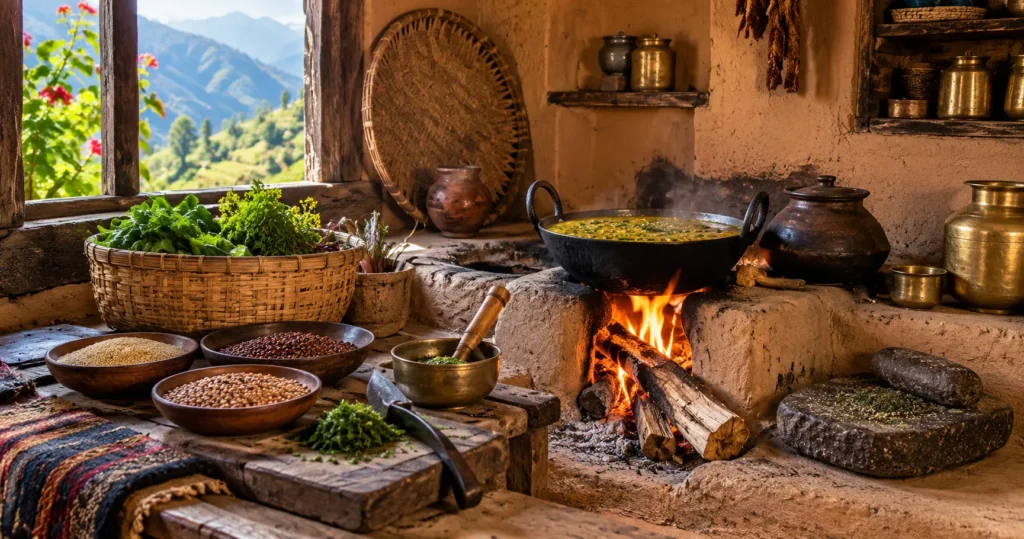
Trying local food can be an enjoyable way to explore Kumaon’s culinary heritage. The best experience may come from a traditional meal prepared by a local cook rather than a long list of dishes on a standard restaurant menu.
Local Eateries and Traditional Restaurants
In towns such as Almora and Nainital, visitors can look for restaurants that explicitly offer regional Uttarakhandi dishes. Availability varies by establishment, so check the current menu before visiting.
Ask whether dishes such as Bhatt ki Churkani, Aloo ke Gutke or regional pulse preparations are actually available that day. Some traditional dishes may need advance notice.
Homestays Offering Home-Cooked Meals
Homestays can offer an opportunity to experience everyday cooking and seasonal ingredients. Before booking, ask what meals are included, whether local dishes can be requested and how much notice the host needs.
Do not assume every homestay serves a traditional Kumaoni menu. Confirm the arrangements directly with the property.
Local Markets and Traditional Sweets
Almora is particularly associated with Bal Mithai and Singori. Local sweet shops can help visitors understand how these products are made, sold and presented.
When purchasing sweets for travel, ask about freshness, storage and recommended consumption time. This is particularly relevant for fresh khoya-based preparations.
Food Experiences to Look For in Kumaon
A few useful experiences include:
- Trying a locally prepared pulse dish with rice or roti.
- Sampling a seasonal fruit or drink when it is available.
- Asking a local cook about differences between home-style and restaurant recipes.
- Buying traditional sweets from an established local shop.
- Learning about the grains and pulses used in regional cooking.
For a more informative article, include only verified businesses, current opening details and prices that you have checked. A personal visit or interview can make these recommendations much more useful than a generic list.
How to Experience Kumaoni Food at Home
You do not need access to every traditional ingredient to begin exploring Kumaoni cuisine. Start with a manageable dish, understand its ingredients and build your familiarity with regional flavours over time.
Beginner-Friendly Dishes to Try
Aloo ke Gutke: A practical starting point for learning how potatoes and a simple spice tempering can create a flavourful dish.
Madua Roti: A useful way to explore finger millet. Because the flour behaves differently from wheat, use a recipe that explains dough consistency and shaping.
Jhangora ki Kheer: An accessible introduction to cooking barnyard millet as a dessert. Pay attention to the liquid ratio and stir regularly while it cooks.
Bhang ki Chutney: Try this only with food-grade hemp seeds from a reliable source and a properly verified recipe. If you cannot source the ingredient confidently, choose another traditional accompaniment.
Essential Ingredients to Source
Depending on the recipe, you may need bhatt, gahat, madua flour, jhangora, jakhiya, curd and seasonal vegetables.
When purchasing traditional grains or pulses, check the packaging, quality and storage conditions. Some ingredients may be easier to find in regional shops or online specialty stores than in a general supermarket.
Substitutions can be useful, but they may change the texture or flavour. Explain these differences rather than presenting a substitute as identical to the original ingredient.
Tips for Preserving Traditional Flavours
- Follow a tested recipe for quantities and cooking times.
- Roast spices and pulses only as directed; excessive roasting can create bitterness.
- Allow enough time for pulses to soften properly.
- Use fresh, correctly identified ingredients.
- Keep a note of any adjustments you make so that you can reproduce a successful result.
- If possible, learn from a local cook and record the recipe with their permission.
Explore More Through Detailed Recipes
A general Kumaoni food guide can introduce dishes, but individual recipe pages can explain quantities, equipment, preparation time, serving sizes and troubleshooting in much greater detail.
If your website publishes dedicated recipes, link to them from the relevant dish descriptions. This helps readers move from discovering a dish to actually preparing it.
Frequently Asked Questions About Kumaoni Food
What Is Kumaoni Food Famous For?
Kumaoni food is known for its traditional pulse dishes, local grains, seasonal vegetables, distinctive seasonings and sweets such as Bal Mithai and Singori. The cuisine includes both everyday home-cooked meals and preparations associated with special occasions.
What Are the Most Popular Traditional Kumaoni Dishes?
Dishes commonly associated with Kumaoni cuisine include Bhatt ki Churkani, Bhatt ke Dubke, Gahat ki Dal, Aloo ke Gutke, Bhang ki Chutney and regional pulse preparations such as Ras. Their recipes and availability can vary by household and location.
Which Grains and Pulses Are Used in Kumaoni Cuisine?
Commonly discussed ingredients include bhatt (black soybean), gahat (horse gram), madua (finger millet) and jhangora (barnyard millet). Rice and wheat are also used in traditional meals.
What Sweets Are Famous in Kumaon?
Bal Mithai and Singori are particularly associated with Almora and the surrounding Kumaon region. Arsa is another traditional sweet found in Uttarakhand’s food traditions, while Jhangora ki Kheer is a familiar millet-based dessert.
What Is the Difference Between Kumaoni and Garhwali Food?
Kumaoni and Garhwali cuisines share ingredients and cooking methods, but some dishes, names and local traditions are more strongly associated with one region. The distinction is not absolute because recipes and food practices overlap across Uttarakhand.
Where Can You Try Traditional Kumaoni Food?
Visitors can look for regional restaurants, local eateries and homestays in Kumaon. Almora is also known for traditional sweets such as Bal Mithai and Singori. Check current menus and meal availability before visiting.
Conclusion : Exploring the Traditional Flavours of Kumaon
Kumaoni food reflects the ingredients, cooking knowledge and everyday traditions of the Kumaon region. From bhatt and gahat preparations to madua roti, seasonal greens, chutneys and traditional sweets, its variety comes from the different ways local ingredients are used and shared across generations.
Exploring this cuisine means looking beyond famous dish names. It means learning how ingredients are prepared, how recipes vary between households and how seasonal produce shapes local meals. Supporting local cooks, food producers and traditional sweet makers can also help keep these food traditions visible and valued.
Whether you discover Kumaoni cuisine during a visit to Uttarakhand or begin cooking it at home, start with a dish that interests you and take time to understand its ingredients and preparation.
Which Kumaoni dish would you most like to try – or which one is your favourite? Share it in the comments.