❮❮  💯 Authentic Uttarakhand Products     ✦     🚚 Pan India Delivery   ❯❯

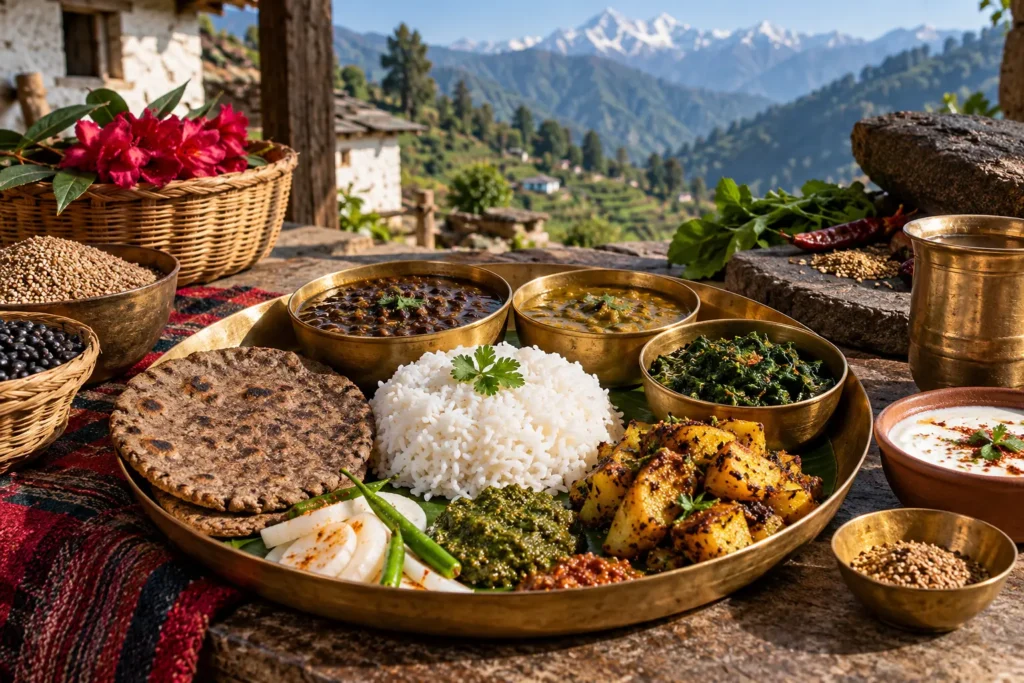
Traditional Kumaoni food thali with bhatt ki churkani, madua roti, aloo ke gutke and local pahadi dishes
Art & Culture

Kumaoni Food: Traditional Dishes, Local Ingredients and Flavours of Uttarakhand

Kumaoni food is an important part of the culinary heritage of Uttarakhand, shaped by the landscapes, ingredients and everyday traditions of the Kumaon region. From hearty lentil preparations and millet-based breads to seasonal greens, fresh chutneys and traditional sweets, Kumaoni cuisine offers a distinctive combination of earthy flavours and simple cooking techniques. Many traditional dishes use ingredients such as bhatt (black soybean), gahat (horse gram), madua (finger millet), jhangora (barnyard millet) and locally used seasonings. These ingredients are transformed into comforting meals through roasting, simmering, grinding and slow cooking. The exact recipes can vary from one household to another, making family traditions an important part of the cuisine. Whether you are exploring the food of Almora, planning a trip to Nainital or hoping to prepare a traditional Pahadi meal at home, understanding Kumaoni food means looking beyond a list of famous dishes. It also means discovering the ingredients, techniques and local practices that give these meals their character. What Is Kumaoni Food? Kumaoni food refers to the traditional cuisine of the Kumaon region of Uttarakhand, India. It includes everyday meals, festive preparations, seasonal foods, snacks, breads, chutneys and sweets that have developed around local ingredients and household cooking traditions. The cuisine includes a variety of pulses, grains, vegetables and dairy-based preparations. Rice and wheat are used alongside traditional grains such as madua and jhangora. Pulses such as bhatt and gahat feature in several familiar dishes, while local seasonings contribute distinctive flavours. Key Characteristics of Traditional Kumaoni Meals 1. Everyday ingredients with distinctive flavours Many dishes are built around familiar ingredients rather than elaborate combinations. Pulses, grains, potatoes, leafy vegetables, curd and seasonal produce form the foundation of numerous meals. 2. Different cooking techniques Roasting, grinding, tempering and slow simmering play important roles in many traditional preparations. For example, bhatt is roasted before being cooked in certain versions of Bhatt ki Churkani, while jakhiya is commonly used for tempering potatoes in Aloo ke Gutke. 3. Regional and household variations A recipe passed down through one family may differ from a version prepared in another household. Ingredient proportions, spices, thickness and serving styles can all vary. There is no single recipe that represents every Kumaoni kitchen. 4. Food connected to everyday life Traditional meals are not limited to special occasions. Lentil dishes, breads, rice, vegetables and chutneys are part of the wider home-cooking tradition, while sweets and selected preparations may be associated with festivals, gatherings or hospitality. What Makes Kumaoni Cuisine Different? Kumaoni cuisine reflects the ingredients available in the hills and the cooking practices developed around them. Its identity comes not from one particular dish but from the combination of local grains, pulses, seasonings and preparation methods. Locally Available Grains and Pulses Traditional grains and pulses are an important part of the region’s food heritage. The role of these ingredients extends beyond individual recipes. They offer different flavours and textures and can be prepared in several ways depending on the meal. Traditional Spices and Seasoning Jakhiya, a small seed used for tempering, is associated with the flavour of several Pahadi preparations. When added to hot oil, it contributes a distinctive aroma and texture. Other seasonings, including cumin, chilli, coriander and locally prepared salt-and-spice mixtures, may be used depending on the dish and household recipe. Bhang ki Chutney is another familiar preparation in which roasted hemp seeds are ground with seasonings to create an accompaniment. The aim is not always to make a dish extremely spicy. The balance between the main ingredient, seasoning and cooking technique is often just as important. Seasonal Ingredients and Food Preservation Seasonal produce contributes variety to Kumaoni food. Buransh, or rhododendron, is used in regional drinks and squash preparations. Kafal, a wild Himalayan berry, is associated with the warmer months, while leafy greens and other local produce may be available at particular times of year. Drying, storing grains and pulses, and preparing preserved foods are useful ways of extending the availability of ingredients. However, the exact methods and seasonal calendars differ by location and household. Home-Style Cooking and Regional Variations Traditional cooking is often learned through family practice rather than a single written recipe. The amount of water used in a dal, the texture of a chutney or the way a particular vegetable is seasoned may reflect individual preferences. This variation is part of the cuisine’s richness. When exploring Kumaoni food, it is useful to treat recipes as living traditions rather than fixed formulas. Traditional Kumaoni Dishes You Should Know Traditional Kumaoni cuisine includes a variety of pulse-based dishes, grain preparations, seasonal foods and regional sweets. The District Almora cuisine guide offers additional information about local specialities such as Dubuk, Singori and Bal Mithai. Bhatt ki Churkani Bhatt ki Churkani is a traditional Kumaoni preparation made with bhatt, or black soybean. The beans are roasted and then cooked into a savoury curry, often thickened with flour or another suitable starch depending on the recipe. Roasting contributes a deeper flavour, while simmering helps soften the beans and bring the gravy together. The finished dish is commonly enjoyed with rice. For anyone trying this dish at home, the main practical considerations are allowing enough time for the beans to soften and achieving a smooth, well-seasoned gravy. Cooking times will depend on the beans, soaking method and equipment. Bhatt ke Dubke Bhatt ke Dubke is another preparation associated with black soybean. Unlike Churkani, versions of Dubke commonly use ground or coarsely processed pulses to create a thick, comforting dish. The texture is an important part of the experience. The ground pulse should cook thoroughly and blend into the gravy rather than remain raw or gritty. Families may use different seasonings and methods, so it is worth following a recipe from a reliable Kumaoni cook when preparing it for the first time. Gahat ki Dal and Ras Gahat ki Dal is prepared using horse gram, a pulse with a distinctive earthy flavour. It can be served as a simple dal or used in other traditional preparations. Ras is a broader
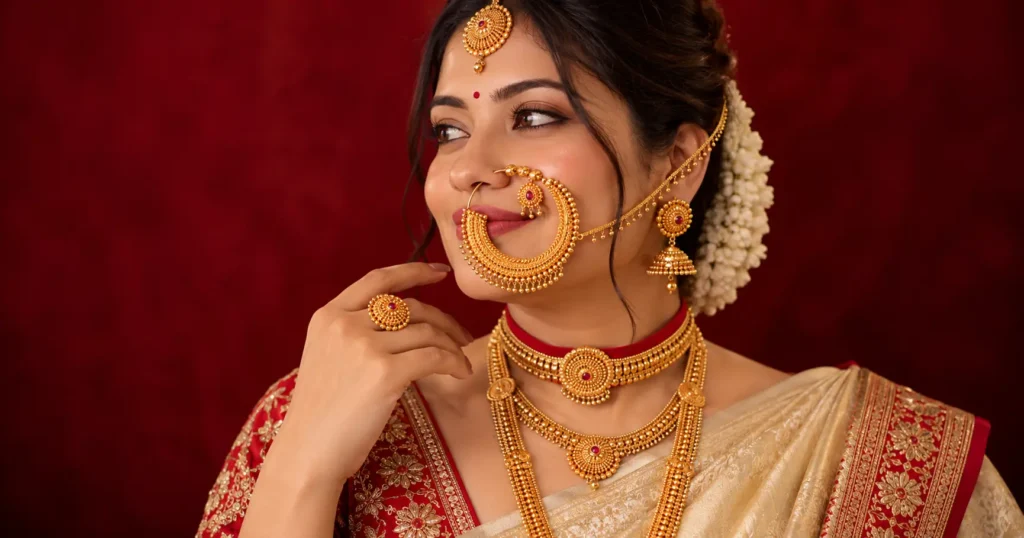
Traditional Kumaoni jewellery featuring a Nath and Guloband
Art & Culture

Traditional Jewellery of Uttarakhand: History, Culture & the Stories Behind Kumaoni Ornaments

The traditional jewellery of Uttarakhand is an important part of the region’s cultural heritage. From the distinctive Kumaoni Nath and Guloband to the Paunchi bracelet and the traditional Hansuli necklace, these ornaments reflect local craftsmanship, family traditions and changing styles of adornment. Traditional Kumaoni jewellery is particularly recognised for its distinctive forms, including gold ornaments set against coloured fabric, elaborate nose rings and traditional necklaces. Jewellery traditions also differ across Kumaon, Garhwal and other communities of Uttarakhand, making the region’s heritage diverse rather than uniform. Understanding the history of Kumaoni jewellery means looking beyond its appearance. Historical sculptures, regional cultural records, traditional ornaments and family heirlooms all provide clues about how jewellery has formed part of life in the Himalayan region. This guide explores the history, names, materials and cultural significance of Uttarakhand’s traditional ornaments while distinguishing documented evidence from traditions that require further historical verification. What Is Traditional Jewellery of Uttarakhand? Traditional jewellery of Uttarakhand refers to the ornaments associated with the region’s different communities, including Kumaonis, Garhwalis, Bhotiyas and Jaunsaris. These ornaments include nose rings, necklaces, earrings, bangles, armlets, waist ornaments and anklets. Gold and silver are important materials in traditional Uttarakhand jewellery. Some ornaments also incorporate beads, coloured fabric, threads and decorative metalwork. Their designs reflect local preferences, practical considerations and established customs. Jewellery can serve several purposes: These roles are not identical for every ornament or community. An ornament’s meaning can depend on its design, the occasion on which it is worn and the traditions of the family. Traditional jewellery also differs from contemporary adaptations. Older designs may use characteristic shapes, materials and construction methods, while modern versions may change the weight, finish or materials to suit current preferences. History of Traditional Jewellery in Uttarakhand Early Traditions and Historical Evidence The history of jewellery in Uttarakhand can be studied through archaeological sculptures, historical objects, regional scholarship and surviving craft traditions. A 2021 research article by Pratibha Joshi, published in The Asian Man: An International Journal, discusses traditional jewellery in the context of Uttarakhand’s cultural history. It identifies ornaments depicted on historical religious sculptures, including necklaces, earrings, armlets and waist ornaments. The article refers to a ninth-century image of Parvati recovered from Almora, depicting ornaments such as kundal, Hasuli, Ekavali, Bhujband and Katisutra. Such representations provide evidence that elaborate personal adornment was part of the region’s historical artistic traditions. However, an ornament depicted on a religious sculpture should not automatically be identified as the exact equivalent of a modern Kumaoni ornament. Similarities in shape can provide useful clues, but establishing an unbroken connection requires additional evidence. Historical sculptures therefore help explain the longer history of adornment in the region without proving the precise origin date of every ornament worn today. Jewellery, Society and Family Heritage Traditional jewellery can carry significance beyond its decorative appearance. Gold and silver ornaments may represent family wealth, personal inheritance and memories associated with weddings or other important occasions. In some families, jewellery is passed from older generations to younger members. An inherited Nath, necklace or bracelet can therefore connect a present-day wearer with family photographs, ceremonies and the experiences of earlier generations. Jewellery may also be given as a gift during marriage or other milestones. Nevertheless, customs vary across communities and families, so a particular gifting practice should not be treated as universal throughout Uttarakhand. Traditional Craftsmanship and Goldsmiths Traditional goldsmiths and jewellery artisans play an important role in preserving regional designs. Their work may involve shaping metal, creating decorative surfaces, assembling components and fitting ornaments to suit individual wearers. Traditional jewellery production can combine practical construction with aesthetic detail. The arrangement of metal pieces, use of coloured fabric and proportions of an ornament can distinguish one design from another. Contemporary jewellery may reinterpret these designs using lighter materials, simplified construction or different finishes. Such adaptations can make traditional styles accessible to new audiences, although they should be distinguished from documented historical examples. History of Kumaoni Jewellery: Origins, Traditions and Cultural Meaning Kumaoni jewellery forms an important part of the cultural heritage of the Kumaon region of Uttarakhand. Commonly documented ornaments include the Nath, Guloband, Paunchi, Hansuli and other pieces worn on the head, ears, neck, arms, waist and feet. The Kumaon Mandal Vikas Nigam publication Traditional Kumaoni Jewellery lists numerous regional ornaments and illustrates pieces such as the Nath, Guloband and Paunchi. It provides a useful reference for identifying traditional ornament names and their placement on the body. The history of Kumaoni jewellery should not be reduced to a single origin story. Different designs may have developed over different periods, and some ornaments may share characteristics with jewellery from neighbouring Himalayan regions. Kumaoni Jewellery in Weddings and Family Traditions Weddings are an important setting in which traditional Kumaoni ornaments may be worn. Bridal jewellery can include a Nath or Nathuli, necklaces, bangles and other pieces chosen according to family customs and personal preferences. Some ornaments are associated with marriage or ceremonial dress, while others can be worn on festivals and family occasions. The choice of jewellery may depend on the community, the region, the occasion and the family’s inherited collection. Traditional jewellery may also be gifted to a bride or preserved as a family heirloom. Specific gifting customs should be verified for the community being discussed rather than assumed to apply to every Kumaoni family. Regional Variations Across Kumaon Kumaon is not culturally uniform. Jewellery styles, local names, designs and wearing practices can differ between areas and families. An ornament may have multiple spellings or closely related names. For example, Guloband is also written as Galobandh or Guluband in different publications. Such spelling differences do not necessarily indicate separate ornaments. When documenting regional variations, photographs, local artisan interviews and community-specific references are particularly valuable. They help distinguish a locally established design from a modern interpretation marketed under a traditional name. Traditional Kumaoni Jewellery: Names and Cultural Significance The following ornaments are among the best-known pieces associated with Uttarakhand’s traditional jewellery heritage. Their descriptions summarise documented forms, while recognising that individual

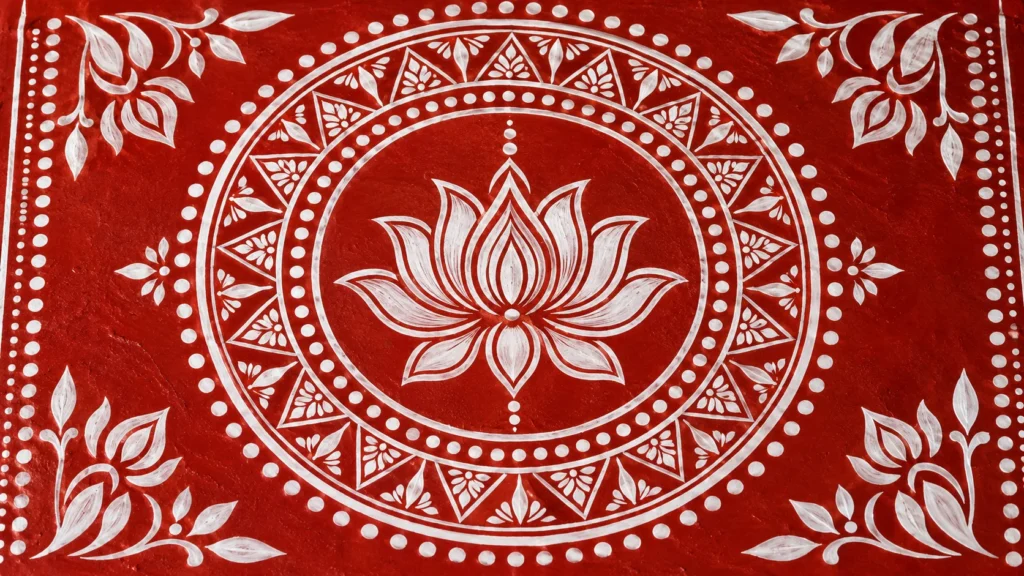
Traditional Aipan art design with white patterns on a red background
Art & Culture

Aipan Art of Uttarakhand: History, Designs, Colours & DIY Guide

Aipan art is one of the most beautiful traditional folk art forms of Uttarakhand, India. Known for its elegant white patterns on a red background, this art reflects the cultural heritage, beliefs and artistic traditions of the Kumaon region. From decorating entrances and courtyards to creating sacred designs for mandirs, Aipan has an important place in traditional ceremonies and modern homes. In this guide, you will discover the history of Aipan art, its traditional colours and tools, popular Aipan art designs, and simple steps to make Aipan art at home. What Is Aipan Art? Aipan art is a traditional folk art form associated with Uttarakhand, particularly the Kumaon region. It is traditionally created on floors, walls, doorsteps and places used for religious ceremonies. Traditional Aipan designs often feature geometric patterns, dots, lines, flowers and symbolic motifs. These patterns are commonly made using white rice paste over a red background prepared with geru, a natural red ochre material. Aipan is more than decoration. It represents cultural identity, devotion, creativity and the continuation of traditions passed down through generations. For more information about the traditional designs and cultural significance of Aipan art, explore the Incredible India guide to Aipan art. Aipan Is Associated with Which State? Aipan art is associated with Uttarakhand, India, especially the Kumaon region. It is practised during festivals, weddings, religious occasions and other important family ceremonies. Although traditional Aipan is closely connected with Kumaoni culture, it is also gaining popularity in other parts of India through home décor, handmade products and contemporary artwork. What Is the Meaning of Aipan Art? Aipan is a traditional decorative and ritual art form that expresses auspiciousness, devotion and cultural heritage. The designs are often created to mark special occasions, welcome guests and decorate sacred spaces. Different patterns may have different cultural or ritual associations depending on the occasion and local tradition. Aipan also represents the creativity of local artists and the preservation of Uttarakhand’s folk-art heritage. History of Aipan Art Aipan art has deep roots in the traditional culture of Kumaon, Uttarakhand. Historically, families created these designs at home during religious ceremonies, festivals, weddings and other auspicious occasions. The art was traditionally practised by women and passed from one generation to another through observation and practice. Designs were made by hand using locally available materials, including red geru and white rice paste. Different patterns were associated with particular ceremonies and sacred spaces. The designs could be created on entrances, courtyards, floors and areas used for worship. Today, Aipan art continues to evolve. Artists use traditional motifs on canvases, wooden products, decorative plates, wall hangings, notebooks and other handmade items. These contemporary applications help introduce this regional art form to new audiences while keeping its cultural roots visible. Traditional Colours Used in Aipan Art The traditional Aipan colour combination is simple yet distinctive. 1. Red Background Red is traditionally created using geru, a red ochre material. It provides the background against which the white patterns stand out. 2. White Rice Paste White designs are traditionally drawn using a paste made from rice flour or ground rice mixed with water. The paste is commonly known as biswar in the local tradition. 3. Modern Colours Contemporary artists may use acrylic paints, fabric paints, markers and other materials for decorative or commercial projects. These alternatives are useful for creating long-lasting designs on modern surfaces, although they differ from traditional materials. Aipan Art Tools and Materials If you want to create Aipan art at home, you can begin with a few basic materials. For your first attempt, choose a small, flat surface and practise simple lines, dots and symmetrical patterns. Popular Aipan Art Designs Aipan art includes a variety of designs used for different decorative and ceremonial purposes. The exact patterns and their meanings can vary by region, family and occasion. 1. Traditional Geometric Aipan Geometric Aipan designs use straight lines, dots, circles, squares and repeated shapes. These patterns are suitable for beginners because they help develop control and symmetry. 2. Floral Aipan Design Floral-inspired patterns add a decorative touch to traditional artwork. They can be used on handmade cards, wall art, plates and other craft projects. 3. Aipan Design for Mandir Aipan designs for a mandir often feature carefully arranged lines, dots and symmetrical motifs around a sacred space. A small design on a wooden board or decorative plate can be a practical option for modern homes. When choosing a mandir design, consider the available space and the tradition followed by your family. 4. Laxmi Padchinha-Inspired Designs Footprint-inspired motifs are used in some traditional ceremonial designs associated with welcoming prosperity and auspiciousness. Their use and interpretation depend on local customs. 5. Modern Aipan Wall Art Modern Aipan wall art adapts traditional motifs for contemporary interiors. Artists may create framed artwork, painted boards, coasters, trays and decorative objects inspired by the red-and-white visual style. How to Make Aipan Art at Home You do not need to be an expert artist to begin learning Aipan art. Follow these simple steps to practise a basic design. Step 1: Prepare the Surface Choose a clean, flat surface. For a beginner-friendly project, use thick paper, a practice board or canvas. If you want to follow a traditional method, prepare the surface according to the material you are using. Step 2: Create the Red Background Traditionally, geru is used to prepare a red background. For a modern craft project, you can use a suitable red paint on your chosen surface. Allow it to dry completely before adding the white design. Step 3: Prepare the White Paste Mix rice flour or finely ground rice with a small amount of water to make a smooth paste. Adjust the consistency so it can be applied in controlled lines without becoming too watery. Step 4: Plan a Simple Pattern Start with a central point, a square, a circle or a symmetrical arrangement of dots. You can lightly plan the layout before applying the white paste. Step 5: Draw the Design Use your fingers, a piece

Stay Connected with TheKumaunHaat

Get updates on new arivals, offers and stories from the Hills.

You have been successfully Subscribed! Ops! Something went wrong, please try again.

© 2026 The Kumaun Haat. All rights reserved. | [Privacy Policy] | [Terms & Conditions]

Scroll to Top